Why Rental Businesses Are Moving Away From Manual Operations
April 9, 2026 · by igloo
Why Rental Businesses Are Moving Away From Manual Operations
There is a version of the rental business that sounds completely reasonable on paper: hire good staff, set clear processes, stay responsive to customers, and grow steadily.
For years, that was the playbook.
It is breaking down.
Not because rental businesses are being mismanaged. But because the manual model was never designed to scale. Every new booking, every key handover, every scheduling conflict, every missed after-hours pickup is a crack in a system that depends on human availability to function. And human availability has limits.
The numbers are starting to reflect that reality. According to the 2025 State of Tech in the Equipment Rental Industry report, 83% of rental operators are currently dealing with critical staffing shortages. Yet 67% of those same operators are still using staff for tasks that technology could handle immediately.
That gap is not a technology adoption problem. It is a structural one. And a growing number of rental businesses across bike rental, SUP and watersports, camera gear, trailer rental, and storage are closing it by shifting to unmanned, automated operations.
This article breaks down why, where, and how.
The Industries Already Running Unmanned
Unmanned operations are not a concept rental businesses are preparing for. They are already in use across several verticals, with real results behind them.
Self-Storage
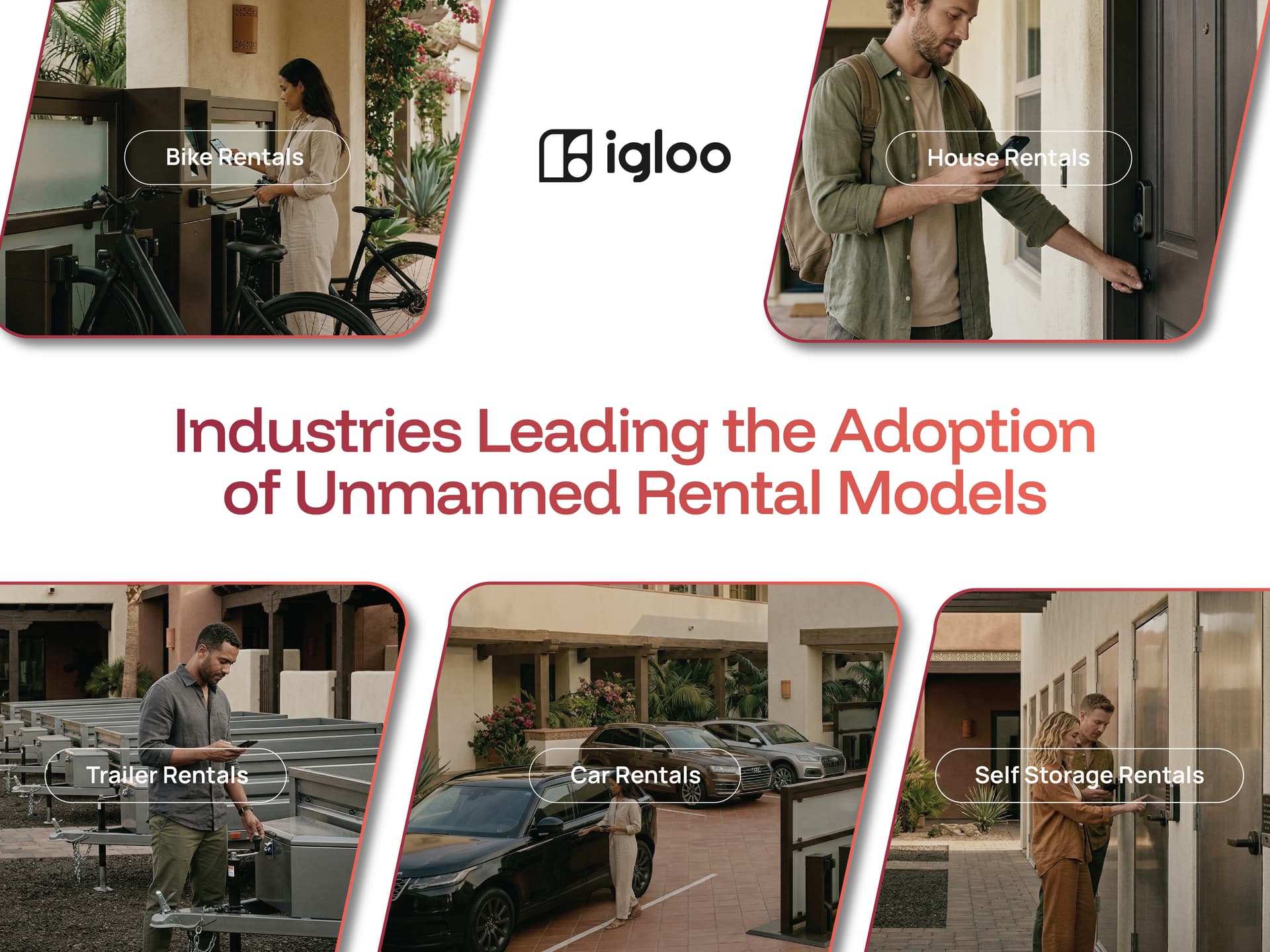
Self-storage has been one of the earliest and most mature adopters of unmanned models. The model works simply: customers rent and access units entirely without onsite staff. Online booking, electronic lock access, and remote video monitoring handle what a full-time manager used to.
According to Inside Self Storage, many of the challenges previously faced when operating an unmanned facility have been eliminated via technology. Customers can rent units online, via a call center, or at a rental station, while unit access is managed entirely through electronic locks without requiring any staff presence.
Operators who have made the switch report the ability to run facilities 24 hours a day, with reduced overhead and no dependency on scheduling around staff hours.
Bike and Mobility Rentals
Bike rental operators are replacing physical check-in counters with smart lock stations and app-based checkout flows. Customers book online, scan or tap to unlock, and return the bike without ever interacting with a staff member. Automated systems track checkouts, flag maintenance needs, and process payments, all in the background.
This model is particularly powerful for operators running multiple locations or seasonal operations, where staffing each site becomes logistically and financially unsustainable.
SUP and Watersports Rentals
Standalone and marina-based SUP rental operators are increasingly using digital access and time-bound codes to manage equipment pickup. Customers receive access credentials at booking and can collect gear independently at a designated window. It removes the bottleneck of staffed handovers at peak times and allows operators to run with minimal or no on-site presence during off-peak hours.
Camera Gear and Equipment Rentals
Camera gear and technical equipment rental is a strong use case for smart locker and digital access systems. Time-bound, single-use access codes mean renters can pick up and return equipment at any hour, and operators can verify access logs remotely. For freelancers and production crews who work outside standard business hours, this is not a convenience upgrade. It is a requirement.
Toolbox24 in Vienna is a real-world example of this in action, running a fully unmanned 24/7 tool rental operation powered by igloo smart lockers, Sharefox booking software, and Inlet access infrastructure. As documented in the igloo case study, customers book online, receive time-bound access codes, and unlock lockers to collect and return gear on their own schedule.
Trailer Rentals
Trailer rental operators are leveraging keyless access and remote fleet monitoring to enable self-service pickup and drop-off. With the right access control layer, a customer can complete an entire transaction, including ID verification, payment, and physical access, without any staff involvement.
What Actually Breaks in a Manual Rental Operation
Manual rental operations do not collapse all at once. They erode. A slow accumulation of friction points that each feel manageable until they are not.
Staffing Constraints
The most immediate problem is also the least controllable. You can invest in training, set up good processes, and hire carefully, but you cannot manufacture staff availability. Operating hours become a negotiation between what customers need and what your team can sustain.
The 2025 State of Tech in the Equipment Rental Industry report found that 83% of operators are experiencing critical staffing shortages. Not inconvenient ones. Critical ones. That means missed bookings, delayed pickups, and customer experiences that depend entirely on who showed up that day.
Scheduling Friction
Manual operations require coordination at every handover. Booking confirmed. Key ready. Staff available. Customer on time. Any one of those variables slipping creates a cascade. The customer shows up and no one is there. Or staff are there but the booking system and the physical key are out of sync. Or a double-booking happens because two systems were not talking to each other.
Human error compounds quickly in environments that rely on manual coordination. And unlike software, it does not leave a clean audit trail.
Limited Operating Hours
A rental business that runs on staff availability runs on staff hours. That typically means something close to 9 to 5, maybe extended to early evening. But rental demand does not follow that pattern. Cyclists want bikes at 7am. Photographers need gear for a Saturday morning shoot. Storage customers move in on Sunday afternoons.
Every hour your operation is closed is revenue that either goes to a competitor or does not happen at all. And scaling hours means scaling headcount, which compounds the staffing problem.
The Quipli 2025 State of Rental report found that companies investing in integrated technology saw a 57% reduction in missed rentals and a 43% improvement in utilization rates. The operational loss from manual systems is not hypothetical. It is measurable.
How Automation Simplifies Rental Operations
Automation does not replace a rental business. It removes the dependencies that cap it.
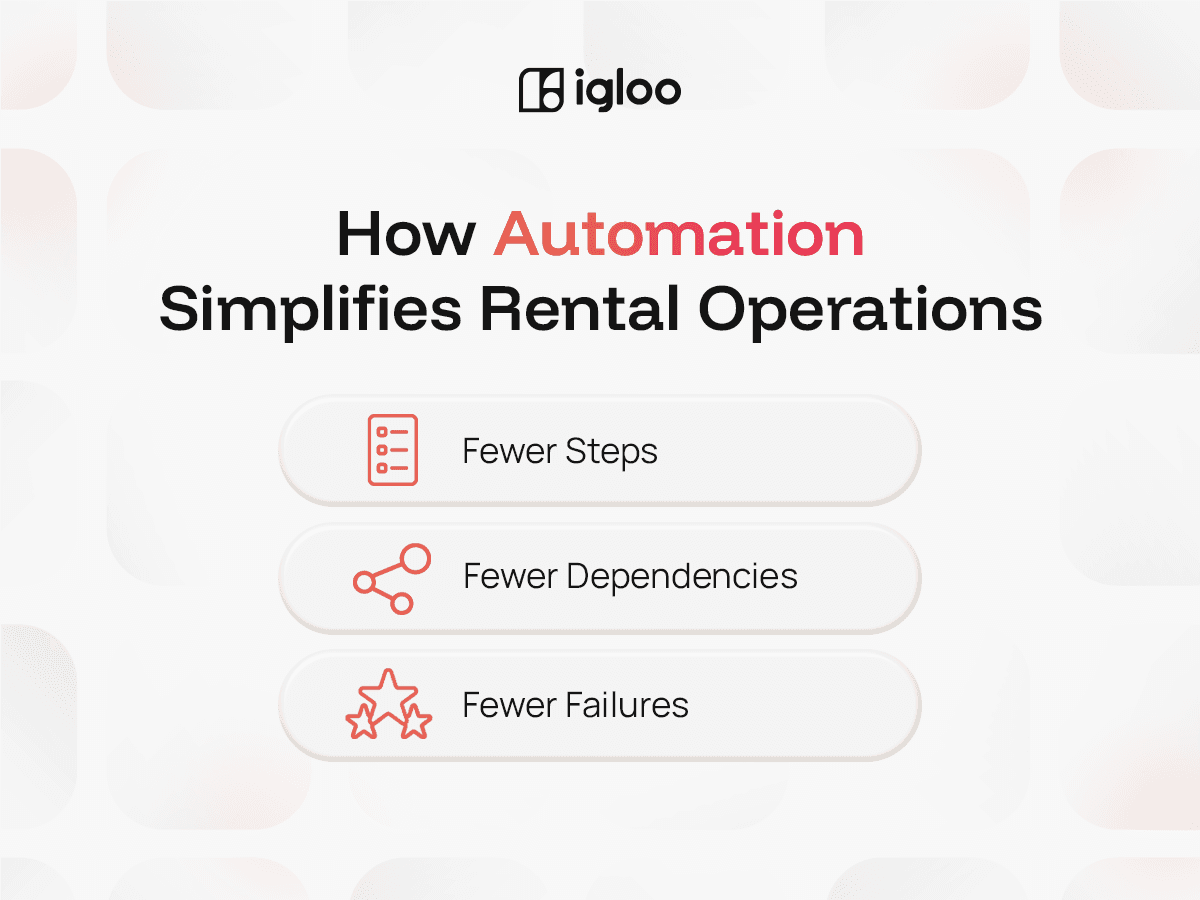
The most effective automation frameworks follow a simple principle: fewer steps, fewer dependencies, fewer points of failure. When the booking, the access, and the return are all handled by connected systems, the human is removed from the transaction without being removed from the business. Operators still manage inventory, handle escalations, set pricing, and make strategic decisions. They just stop being the bottleneck for every handover.
The Core Stack for Unmanned Rental Operations
Online booking with real-time inventory sync
Automated payment capture and receipt
Time-bound digital access delivery (app-based or PIN code)
Smart access hardware at the point of physical handover (locker, door, unit)
Remote monitoring and access log visibility
Automated customer communication at each stage
Each layer removes a manual touchpoint. Together they create an end-to-end flow where a customer can book, pay, access, and return without a staff member in the loop.
Smart Access Is the Physical Layer That Makes It Work
Software can automate the booking. A digital lock is what physically closes the loop. Without a reliable, remotely manageable access point at the equipment or unit itself, automation stops at the front door.
This is where digital locks designed specifically for rental environments matter. The requirements are specific: time-bound access, offline functionality, remote revocation capability, multi-user code management, and an audit trail. A standard consumer smart lock does not meet that bar.
igloo's digital locks are built around these requirements, with algoPIN technology that generates time-bound access codes even without an active internet connection. This is particularly critical for outdoor rental environments, storage facilities, and locations without reliable connectivity.
What the Transition Actually Looks Like
Most operators do not go from fully manual to fully unmanned in one step. The practical path is staged.
Start with online booking and payment. Remove the phone-based and walk-in reservation dependency first.
Add digital access at the physical handover point. This is the inflection point where unmanned becomes real.
Integrate booking software with access control. Time-bound codes that auto-activate at booking confirmation and expire at the end of the rental period.
Layer in remote monitoring, automated communications, and usage tracking. This is where the data advantage starts compounding.
The Operational Shift Is Already Happening
Rental businesses that are still running purely on manual operations are not behind the curve because they missed a trend. They are behind because the model that got them here will not get them where they need to go.
The operators moving to unmanned are not doing it because it sounds modern. They are doing it because the math stopped working on manuals. Every additional location needs additional staff. Every after-hours booking is a missed rental. Every scheduling mistake is a customer experience failure.
Automation does not solve every problem in a rental business. But it solves the structural one: the dependency on human availability for every transaction.
Smart access is the physical layer where that shift becomes real. And the businesses that get it right are not just running leaner. They are running without a ceiling.