Why Traditional Rental Models Break Under Pressure
April 23, 2026 · by igloo
Why Traditional Rental Models Break Under Pressure
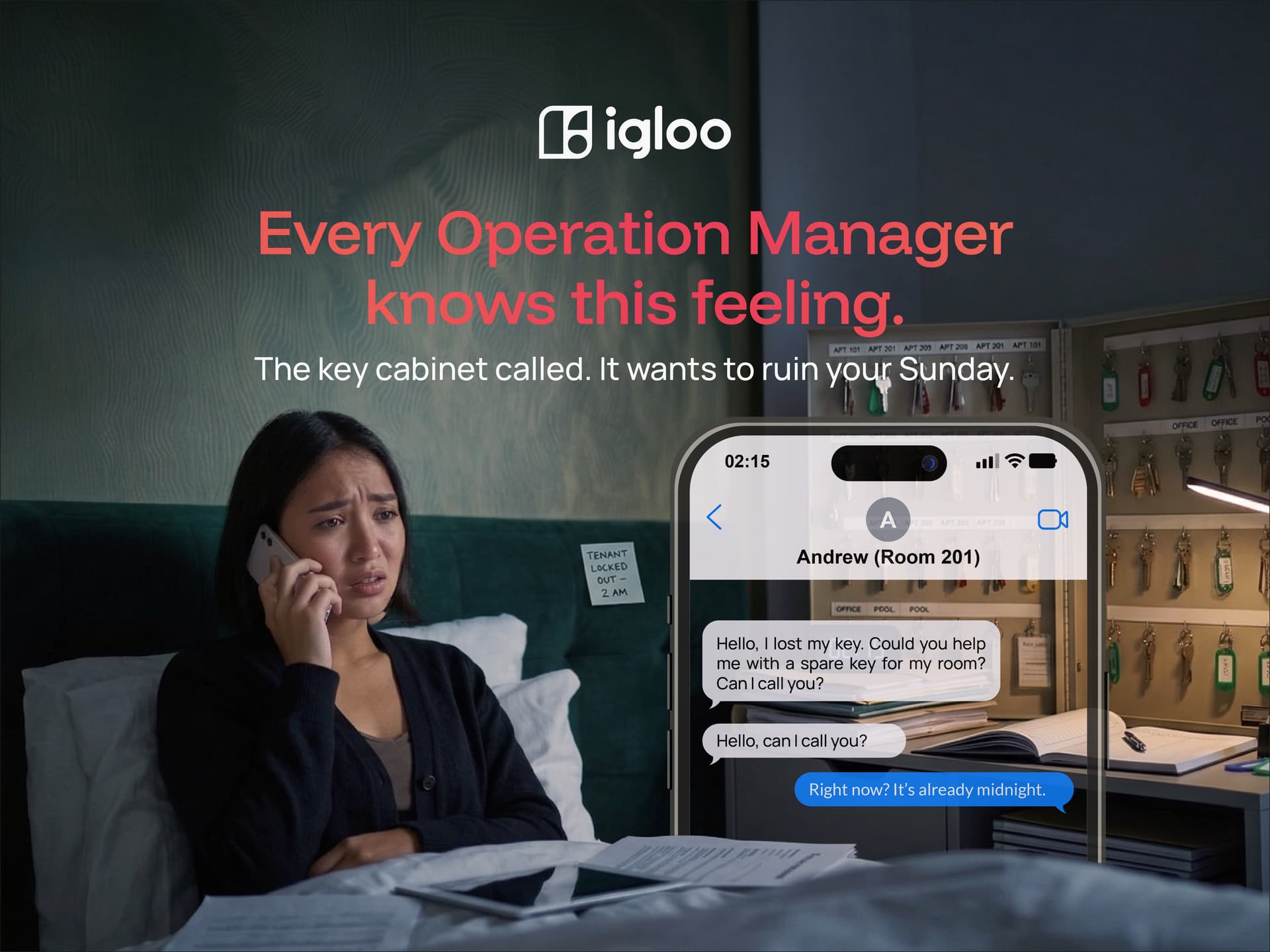
Ask any rental business owner what their biggest operational headache is and you will get a specific answer fast. A staff member who did not show up. A customer who arrived for a pickup and found no one there. A key that was signed out and never returned. A booking that came in at 9pm on a Sunday and went unanswered until Monday morning.
These feel like isolated incidents. They are not.
They are symptoms of the same structural problem, one that is baked into how most rental businesses are built. The operational model that works at launch starts to crack under growth. And the cracks follow the same pattern every time.
This article names them plainly: staffing constraints, scheduling friction, and limited operating hours. Not as failure modes to be ashamed of, but as structural realities to understand. Because understanding them is the first step to building past them.
Challenge 1: Staffing Constraints
The rental industry has a staffing problem and it is not getting smaller.
According to Quipli's 2025 State of Tech in the Equipment Rental Industry report, 83% of rental operators are currently grappling with critical staffing shortages. The same report found that 67% of those operators are still deploying their limited staff on tasks that technology could handle in seconds.
That gap is the problem. Not just the shortage itself, but the fact that the people who are there are doing the wrong things. Preparing keys. Coordinating handovers. Answering booking enquiries that came in after hours. Chasing customers who are late returning equipment.
Every one of those tasks is a manual dependency. And manual dependencies do not scale.
What staffing constraints actually cost
The visible cost is a missed rental when no one is available to handle a pickup. The less visible cost is slower. It is the cumulative drain of building an operational model around people who need to be in a specific place at a specific time for the business to function.
In the car rental sector specifically, the employee turnover rate has climbed above 80%, with labour costs rising 6% year on year, according to EDS Service Solutions. Simply raising wages is no longer a sustainable response. The operators absorbing these costs are subsidising a model that was not built for this pressure.
The staffing problem is not seasonal or situational. It is structural. A rental business that requires a person to be present for every customer interaction has a ceiling, and that ceiling is determined by how many people you can afford to have available at any given time.
That is not a business model. That is a staffing problem wearing a business model's clothes.
Challenge 2: Scheduling Friction
Every rental transaction has a coordination requirement. Booking confirmed. Key prepared. Staff available. Customer on time. Equipment checked. Return logged.
When every one of those steps requires human input, every one of them is a potential point of failure.
Where scheduling breaks down
The most common failure point is not a dramatic one. It is the small misalignment that creates a cascade. A customer books online but the confirmation email does not prompt them to specify a pickup time. Staff assume a morning pickup. The customer arrives at 4pm. Nobody is available. The rental does not happen.
Booqable's rental research found that the average rental business loses 10 to 15 percent of potential revenue annually to no-shows alone. For a business generating USD 200,000 per year, that is up to USD 30,000 in lost revenue from a single operational gap.
Double bookings are the other common failure. When inventory is tracked in a spreadsheet, or split across a booking platform and an internal calendar, conflicts are inevitable. A customer who drove to your location to pick up a trailer that is already out with another customer is not a customer you will see again.
Repair-CRM's equipment rental management research confirms that manual systems are breeding grounds for double bookings, lost equipment, and incomplete rental histories. These are not edge cases. For businesses operating without integrated systems, they are the norm.
Scheduling friction compounds with scale
A single-location rental business can often absorb scheduling friction through close personal management. The owner knows every booking. They can catch conflicts before they become problems.
At two locations, that gets harder. At three or four, it becomes untenable. The coordination overhead required to manually manage scheduling across multiple sites, with multiple staff members and equipment pools, grows faster than the revenue does.
This is the scaling trap that catches most rental businesses. They grow into a scheduling problem that their original model was not built to solve.
Challenge 3: Limited Operating Hours
A rental business that runs on staff availability runs on staff hours. In practice, that means something close to business hours, with extensions that cost extra to maintain.
The problem is that rental demand does not follow business hours.
When customers want to rent
Cyclists want bikes before work. Photographers need camera gear for Saturday morning shoots. Trailer customers want to pick up before they start their weekend project. Storage facility customers move in on Sunday afternoons.
A rental business that closes when the staff go home turns every out-of-hours booking request into a choice: pay overtime to handle it, miss the revenue, or find a way to make it happen without staff.
Hostaway's 2025 rental industry survey found that shorter booking windows and increased customer spontaneity are now the norm. Operators who cannot respond to last-minute demand are simply not in the running for that revenue.
The operating hours problem is particularly acute for rental businesses in seasonal or leisure verticals. Peak demand concentrates in the windows when staffing is most expensive and most difficult to arrange. A summer weekend at a watersports rental location might generate three times the normal booking volume, all at times when staff costs are highest.
Access availability is the ceiling
The deeper issue is not the hours on a sign. It is the physical access dependency behind them.
When a customer can only collect equipment by receiving a physical key from a staff member, the equipment is only available when that staff member is available. Every other hour is dead time.
Real Time Networks' key management research highlights that manual key management is prone to human error at every touchpoint, from tracking key transactions to ensuring keys are returned promptly. Untracked key use leads to lost keys, which leads to halted operations. A single lost key in an automotive or fleet context can cost upwards of USD 650 in replacement costs alone, not counting the operational downtime it creates.
For rental businesses managing multiple keys across multiple pieces of equipment and multiple locations, the risk surface is significant. And it grows with every key added to the system.
The Pattern Underneath All Three
Step back from any one of these challenges and the same structural dependency appears underneath all of them.
Staffing constraints are a problem because the rental cannot happen without a person present. Scheduling friction is a problem because coordination requires multiple people to be aligned. Limited operating hours are a problem because access to the equipment requires staff to be there.
Every challenge leads back to the same root: the rental requires human physical presence to function.
That is not a management problem. It is a design problem. The traditional rental model was designed around human availability at every step. When human availability becomes constrained, the model fails. Not because people are doing their jobs badly, but because the model was never built to run without them at every touchpoint.
Why it gets worse as you grow
The challenges described above are manageable in a small operation. A founder who knows every customer and every piece of equipment can compensate for structural weaknesses through close personal attention.
Growth removes that compensation. More locations mean more coordination. More equipment means more key management. More customers mean more after-hours demand. More staff mean more scheduling variables.
Quipli's rental report found that independent rental operators running multiple locations are most exposed to these compounding pressures. The same report noted that 57% of operators who invested in integrated technology saw a measurable decrease in missed rentals, while 43% reported improved utilisation rates. The operational loss from manual models is not hypothetical. It is being measured.
The question at scale is not whether these problems will appear. It is whether the business has a structural response to them or is managing them one incident at a time.
The Common Fix
Each of the three challenges described in this article has a common resolution: remove the physical presence requirement from the handover.
When access to the equipment is digital, the rental does not require a staff member to be present. The customer books online. They receive a time-bound access credential when payment clears. They collect the equipment at the agreed time. They return it. The access credential expires.
Staffing constraints stop being a cap on capacity. Scheduling friction stops being a coordination problem. Operating hours stop being a ceiling.
The access layer is what makes this possible. And for rental businesses across every vertical, that layer is increasingly the same thing: a digital lock designed for rental environments.