Can You Run a Trailer Rental Business Without Being On-Site? Mårten Has Been Doing It for 7 Years.
The best self-service rental businesses aren't simply open 24/7. They're designed so the owner doesn't have to be there.
Who's Mårten?
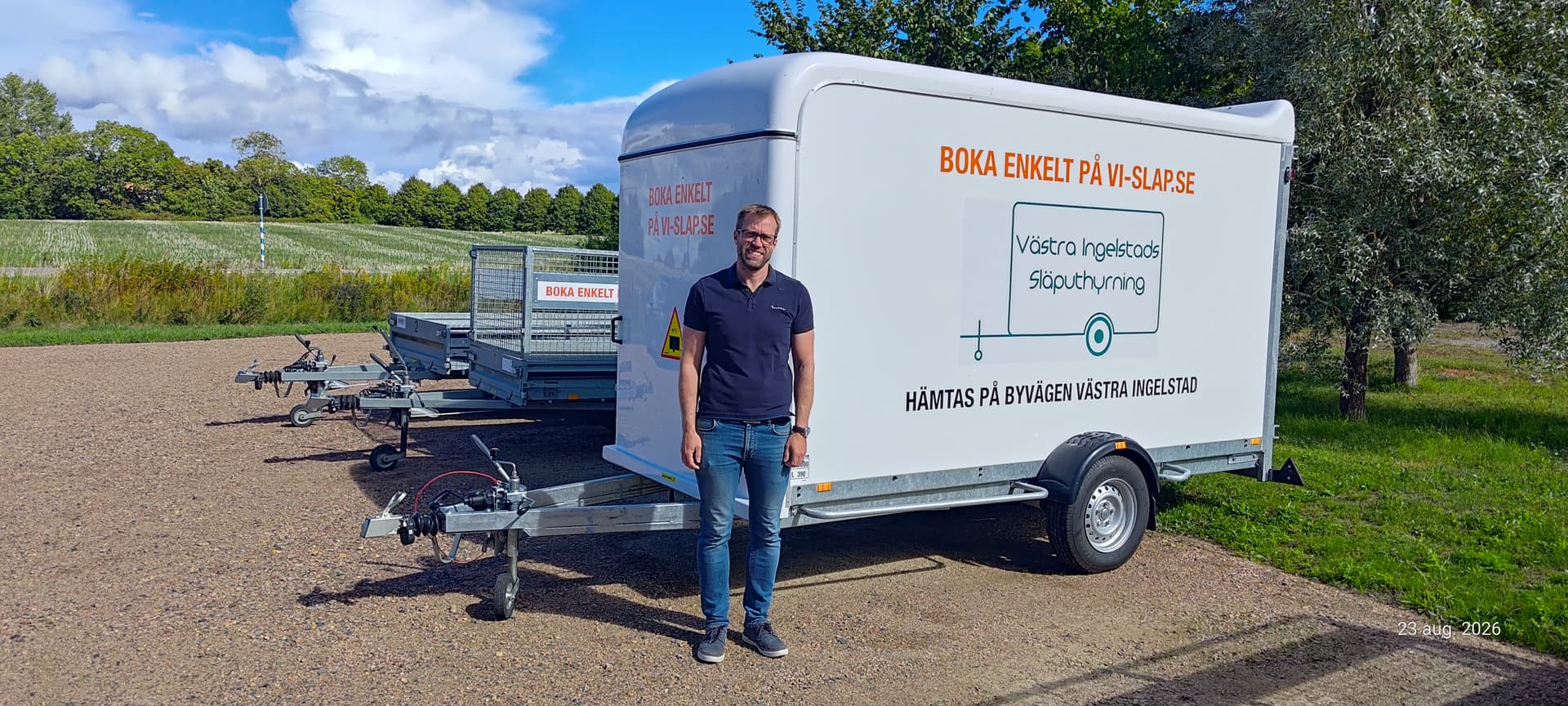
Well, Mårten is a full-time test manager, entrepreneur and — as it turns out — someone who has spent quite a lot of his life around trailers.Growing up, his father ran a gas station where customers could rent trailers. Summers and weekends were particularly busy, so the trailer rental business was something Mårten had seen up close long before he considered starting one himself.
Years later, after moving into his own house, Mårten kept finding himself needing different types of trailers. There was just one problem: there wasn't a local trailer rental nearby.
For some people, that's an inconvenience.
For Mårten, it was a business idea.
But there was another, rather important problem. He already had a full-time job.
If this new venture required him to stand around waiting to hand customers keys every time somebody rented a trailer, it wasn't going to work. So from the very beginning, the question wasn't simply:
How do you start a trailer rental business?
It was:
How do you build one that can run without you being there?
When the Technology Dictates the Customer Journey
In 2019, Mårten founded Västra Ingelstads Släputhyrning, a self-service trailer rental operation in southern Sweden. In 2026, the business expanded with a second location in Hammenhög.
His first attempt at automating trailer access used a lock solution from his trailer supplier. It worked — but the experience wasn't quite what Mårten had in mind. The solution generated more support calls than he wanted, and at the time, the available payment methods didn't fully meet his customers' needs.
More importantly, Mårten had a clear idea of how he wanted his self-service business to work: customers shouldn't have to download an app just to rent a trailer.
He wanted the entire journey to happen through the web — from choosing and paying for a trailer to starting the rental and receiving access. So rather than building his customer experience around the limitations of an existing lock system, Mårten decided to build a solution that gave him more flexibility.
And that meant finding access technology that could fit into the business he wanted to create.
The Lock Needed to Fit the Business — Not the Other Way Around
Mårten had a clear set of requirements.
The lock needed to support web-based access, provide the flexibility for app-based experiences in the future, and — importantly — offer an API so access could be granted automatically.
As Mårten explained:
The requirements for a new lock was that it should work from both web and app, there should be an API so I can grant access automatically when needed.
That search led him to igloo's Padlock 2.
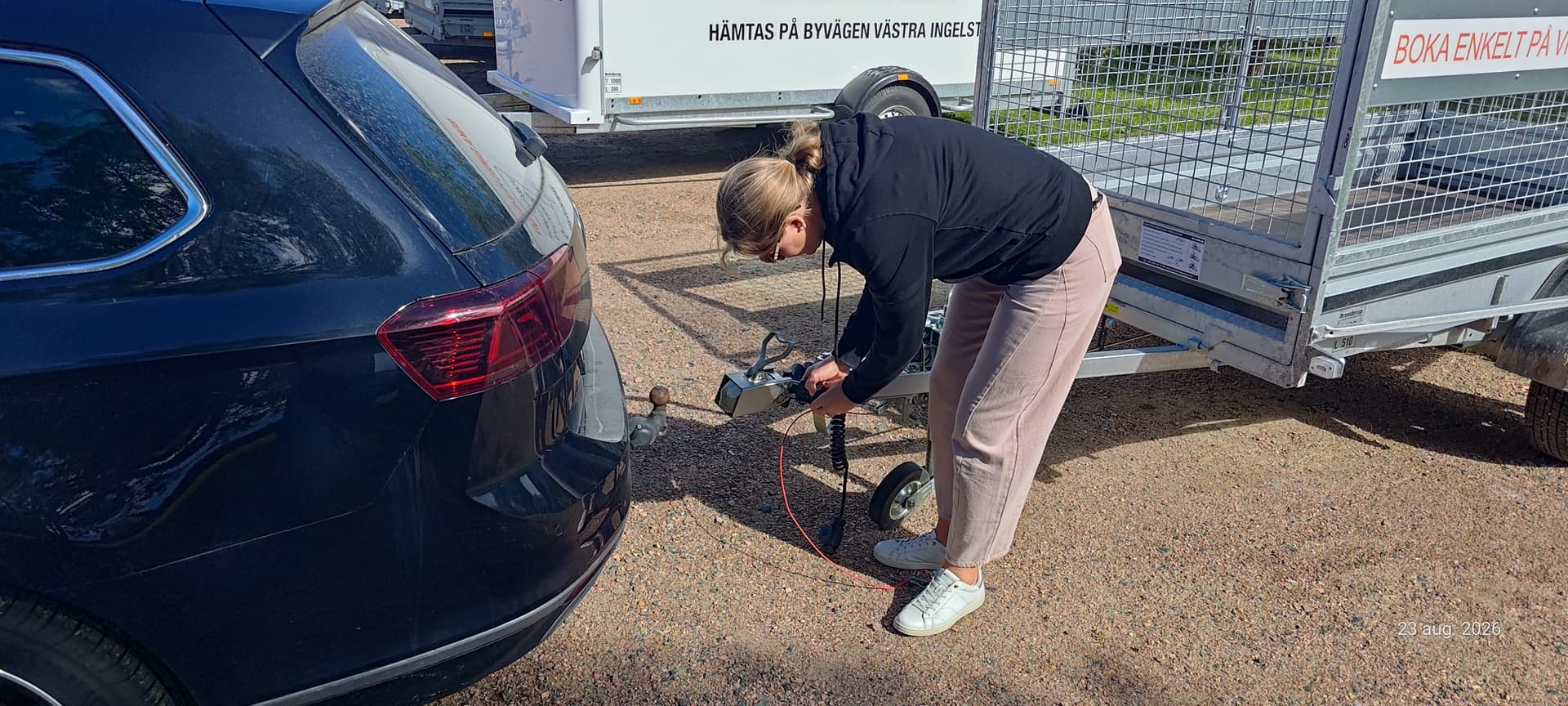
Through igloo's API, Mårten could connect physical access with the booking system he was building. Today, customers simply use a PIN generated through his web-based rental experience to unlock their trailer.
No separate access app. No physical key handover. And no need for Mårten to be waiting on-site.
From Online Booking to Trailer Access
So what does renting a trailer look like today?
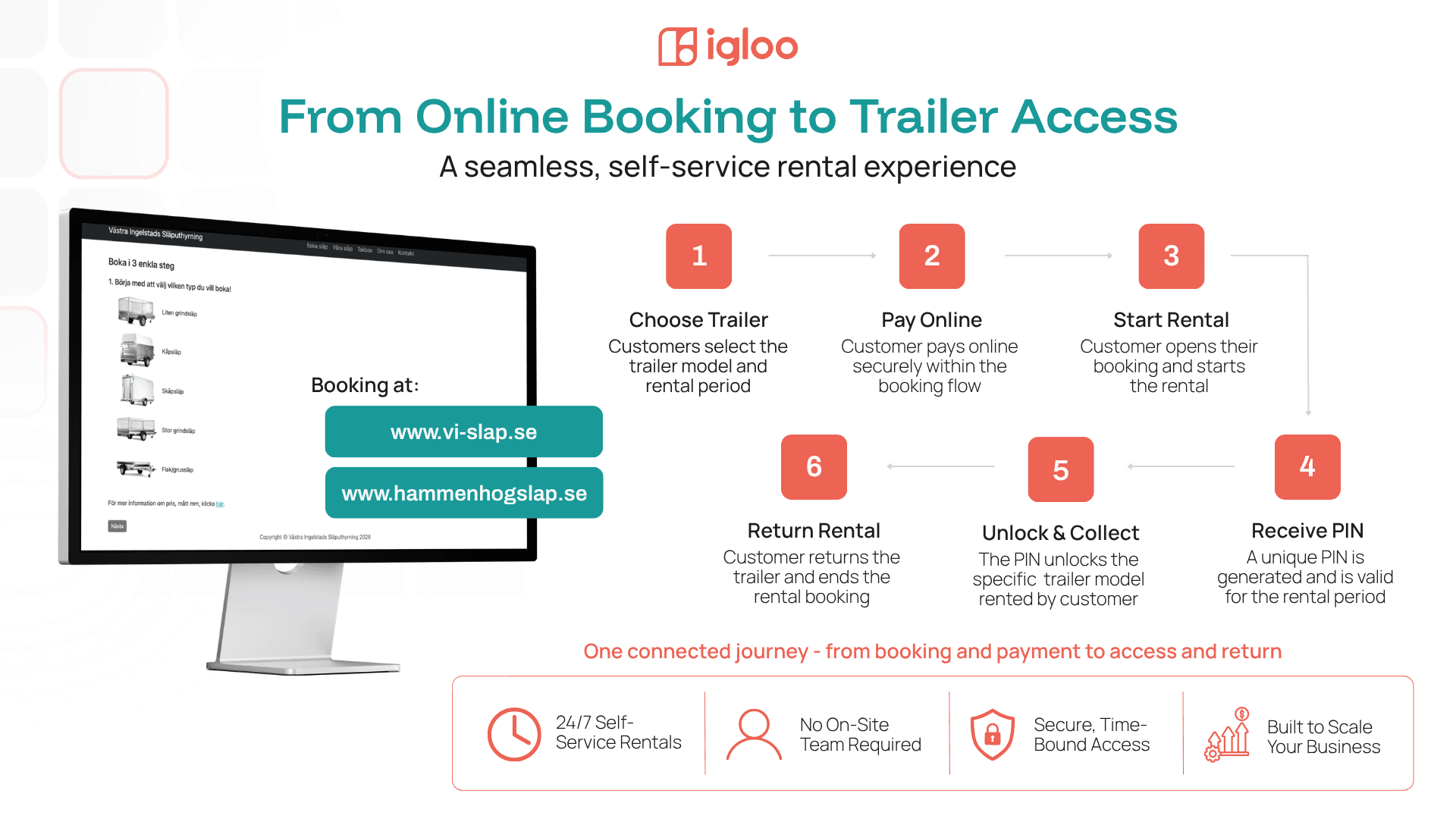 From the customer's perspective, remarkably little happens — which is exactly the point.
1. Choose a trailer: The customer visits the website, selects the trailer model they need and chooses their rental period.
2. Pay online: Payment happens within the booking flow. The customer then receives a confirmation email with a link to their booking.
3. Start the rental: When it's time to collect the trailer, the customer opens their booking and starts the rental.
4. Receive a unique access PIN: Through igloo's API, a unique PIN is generated and remains valid for the rental period.
5. Unlock and collect: The customer enters the PIN on the igloo Padlock 2 securing the trailer — without needing Mårten on-site to hand over a key.
6. Return the trailer: After returning the trailer, the customer reopens their booking and completes the rental.
The Real Test: Did It Make Things Easier?
After introducing the new locks, Mårten noticed something important:
Support calls decreased.
Customers preferred the new solution too.
For a self-service rental business, that's a meaningful outcome. Every support call requiring Mårten to intervene defeats a little bit of the purpose of building an unattended operation in the first place.
And the benefits become even more apparent as the business grows.
Adding another trailer now requires relatively little work. Mårten pairs the lock, adds it to his database and the trailer becomes part of the existing workflow.
As he puts it:
Now when introducing new trailers it is very little work for me. I need to pair the lock, add it into the database and then everything works directly. No extra administration is needed.
One Site Became Two. Why Stop There?
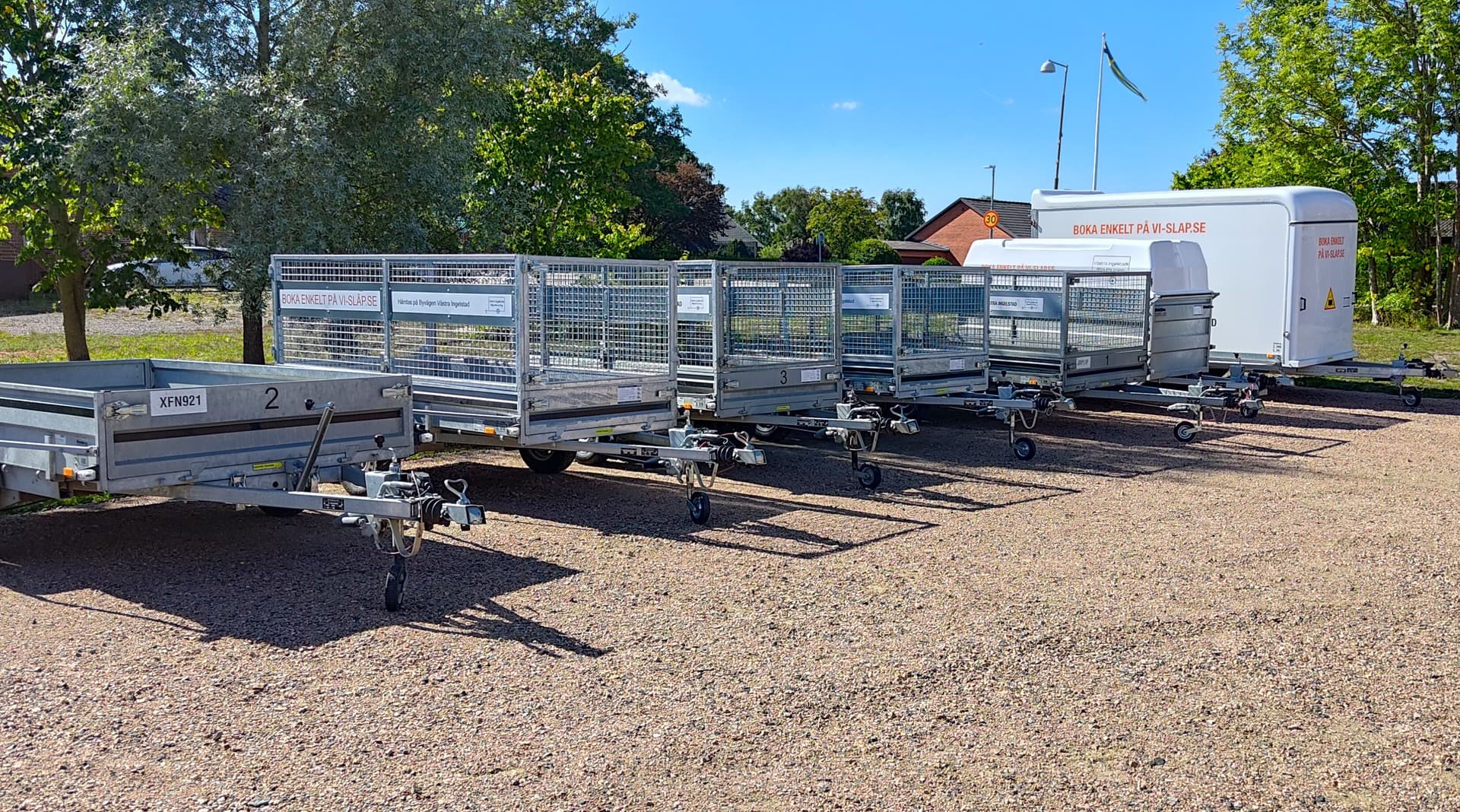
Seven years after opening his first location, Mårten now operates seven trailers at his original site and another four at his second location.
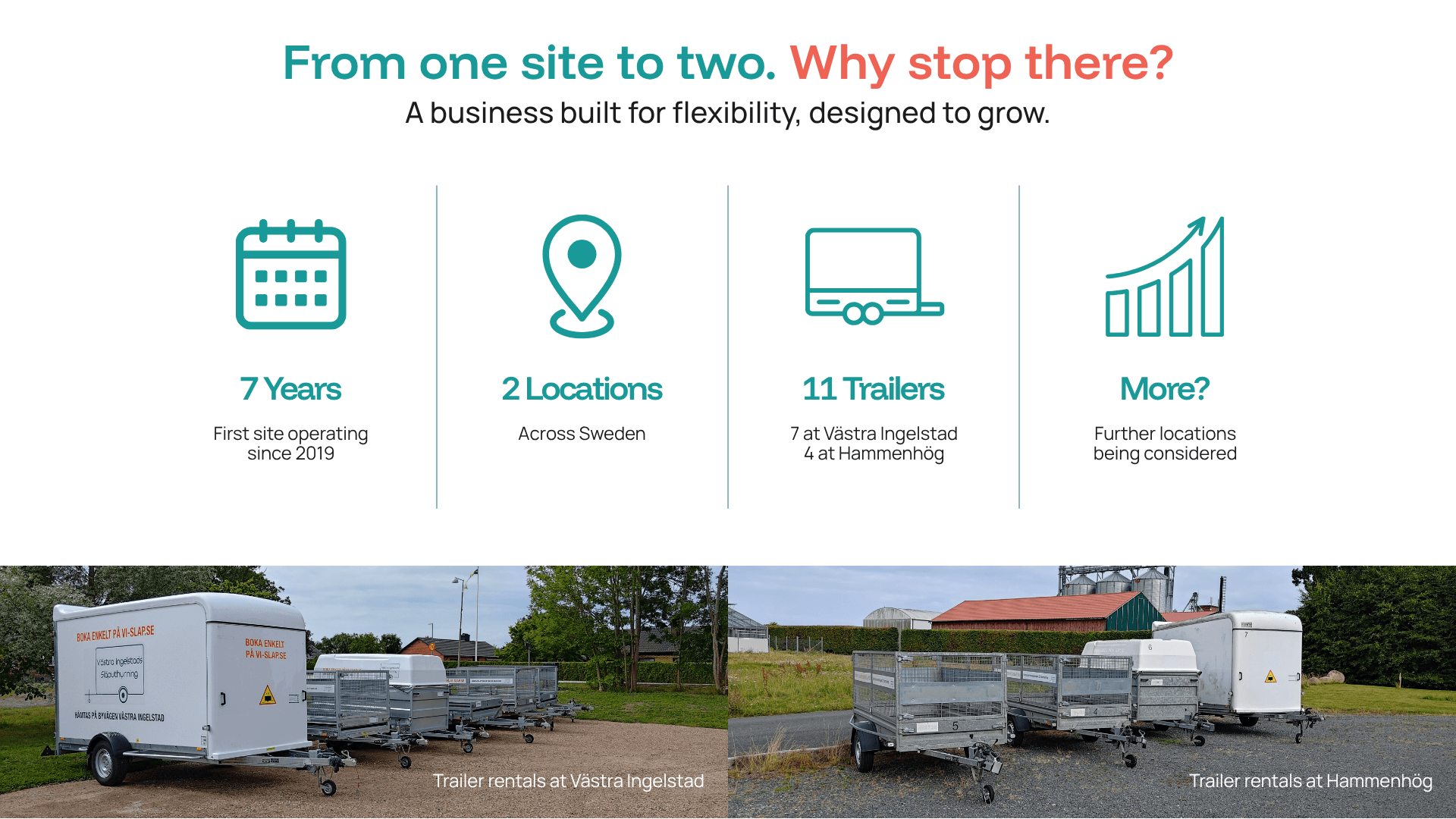
And apparently, opening location number two has created another problem.
Now he wants more.
After starting the 2nd I think I don't want to stop there. I would like to start a few more.
Maybe not this year, he says.
Then again...
You never know.
Mårten is realistic about the competition in trailer rental, but he still believes there's room for smaller operators.
And perhaps that's what makes his story interesting.
He didn't build a large rental company and automate it afterwards. Automation was part of what made the business possible in the first place.
He had a full-time job. He couldn't be on-site whenever someone wanted a trailer. So the booking, payment and access experience had to do more of the work instead.
Seven years later, one site has become two.
And potentially, two could become more.
Could Your Rental Business Run Without You Being There?
Mårten's story started with a simple constraint:
If the business needed him on-site, he couldn't run it.
Today, customers can book, pay and receive time-bound access to their trailer through a self-service workflow. Through API integration, physical access becomes part of the rental journey rather than a separate manual process.
That same principle can apply beyond trailer rental — from equipment and recreational rentals to other unattended businesses where customers need temporary access to physical assets.
If your booking system already knows who has rented an asset and when they're supposed to have it, why should someone still need to be there to hand over the key?
Building an unattended or self-service rental experience?
See how igloo's smart access solutions and API capabilities can connect physical access with your existing rental workflow.